29634 Acting Sergeant
WILLIAM HENRY WELLS
Royal Engineers
By
Lieutenant Colonel (Retired) Edward De Santis, MSCE,
BSAE P.E., MInstRE
U.S. Army Corps of Engineers
(December 2025)
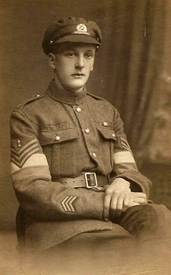
Figure 1. Acting Sergeant William Henry Wells, R.E.
(Image courtesy of the Imperial War Museum)
1. INTRODUCTION
William Henry Wells was born in The Stables, Little Dalby Hall, Leicestershire on 26 December 1894. He was the son of Francis Henry Wells (1852-1934) and Hester Annie Wells, née Cook (1857-1940).[1]
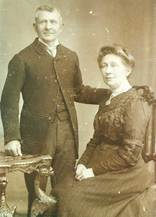
Figure 2. Francis and Hester Wells.
(Image courtesy of Ancestry.com)
William had two younger brothers: Thomas Wells (1896-) and Robert Wells (1899-1908). Thomas also served in the Great War as a Private in the Royal Army Medical Corps.
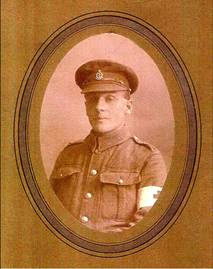
Figure 3. Private Thomas Wells, R.A.M.C.
(Image courtesy of Ancestry.com)
By 1911 young William, 17 years old and unmarried, was working as a Motor and Cycle Improver (Mechanic?) while living with his parents at 164 Herbert Road in Hornchurch, Essex.[2] Presumably he was still involved with this work in August 1914 when the Great War broke out.
2. ENLISTMENT AND TRAINING
Enlistment
Based on his regimental number, 29634, issued to him upon enlistment, it appears that he enlisted in the Royal Engineers shortly after war was declared on Germany. It is likely that he enlisted in August 1914 and immediately proceeded to recruit training.
Training
Following the administrative actions involved with his enlistment, Wells was sent off for his recruit training. With the exception of Drivers, every recruit enlisted for the Royal Engineers had to have a trade. Pioneers and Sappers were sent to Chatham where they were trained in infantry drill and pioneer duties. Well’s period of recruit training could not have lasted for more than three months as he was on his way to France in early November 1914. He may have been a Sapper or perhaps a Driver, as he was being posted to a mounted unit of the Royal Engineers.[3]
3. POSTINGS AND CAMPAIGN SERVICE
Wells joined the 4th Divisional Signal Company near Armentieres on 8 November 1914.[4] The division had been in France since the beginning of the war and had been in several major actions before Wells arrived at the unit. He arrived during a period when the 4th Division was going into winter quarters for 1914/1915, so he did not see any action until the spring of 1915. This would soon change as the 4th Division was one of the most heavily engaged during the war. Fatal casualties suffered by the 4th Divisional Signal Company during the Wels’s time in the war are shown below.[5]
The following is a list of the major actions in which the 4th Division took part during the remainder of the war. Presumably, Wells may have been in most of them, if not all of them.[6]
1915
· The battle of St. Julien (24 April – 4 May 1915).
· The battle of Frezenberg (8-13 May 1915).
┼ 24398 Sapper Louis Vaughan, killed in action (10 May 1915).
┼ 28437 Pioneer James Thompson Wood, killed in action (17 May 1915).
· The battle of Bellewaarde (24-25 May 1915).
On 25 July 1915 Wells was admitted to hospital with pyrexia (a fever) of unknown origin. He was discharged back to duty on 10 August 1915. At the time that he was admitted to hospital he was a Corporal.[7] He would subsequently be appointed an Acting Sergeant.[8]
After a considerable period out of line and in reserve, the 4th Division was again sent forward to participate in many of the most significant actions of the war, to include:[9]
1916
· The battle of Albert (The Somme, 1-13 July 1916).
┼ 23127 Sergeant Herbert Shaw, DCM, killed in action (1 July 1916).
· The battle of Le Transloy (1-18 October 1916).
┼ 84253 Driver Arthur Whitbread, killed in action (23 December 1916).
1917
· The first battle of the Scarpe (9-14 April 1917).
· The second battle of the Scarpe (3-4 May 1917).
┼ 28804 Pioneer E.W. Fowler, killed in action (12 May 1917).
· The battle of Polygon Wood (26 September – 3 October 1917).
┼ 127648 Pioneer Harold Arthur Piner, killed in action (29 September 1917).
┼ 142977 Sapper Percy E. Temple, killed in action (29 September 1917).
· The battle of Broodseinde (4 October 1917).
┼ 206796 Pioneer Wilfrid Hirst Thornton, killed in action (4 October 1917).
· The battle of Poelcappelle (9 October 1917).
· The battle of Passchendaele (12 October 1917).
┼ 253053 Driver Ernest Price, killed in action (30 October 1917).
1918
· The battle of Arras (28 March 1918).
┼ 25859 Driver T. King, killed in action (29 March 1918).
· The battle of Hazebrouck (12-15 April 1918).
· The battle of Bethune (18 April 1918).
· The third battle of the Scarpe (26-30 August 1918).
· The battle of Drocourt-Queant (2-3 September 1918)
· The battle of Canal du Nord (27 September – 1 October 1918).
· The battle of the Selle (17-15 October 1918).
· The battle of Valenciennes (1-2 November 1918).
The 4th Divisional Signal Company suffered a total of 13 fatal casualties during the war, ten of which are listed above. The company lost a Sergeant and a Corporal in 1914 before Wells joined the unit. A Pioneer died in 1919, probably from the Spanish influenza. The loss of only ten men as a result of combat operations is interesting given the number of battles in which the company was involved. No information was found during this research was uncovered regarding any wounds received by Sergeant Wells.
4. MEDALS, AWARDS AND DECORATIONS
Acting Sergeant Wells received the 1914 Star, British War Medal and Victory Medal for his service during the war. NOTE: The medals shown in Figure 4 below are not those of Acting Sergeant Wells. They are shown here for illustrative purposes only.
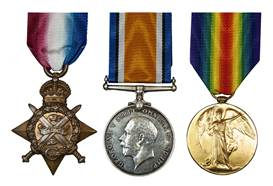
Figure 4. The 1914 Star, British War Medal and Victory Medal.
(Image from the author’s collection)
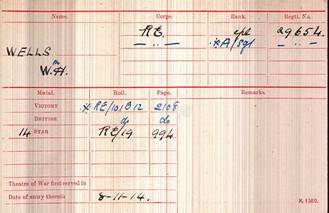
Figure 5. Great War Medal Index Card.
(Image courtesy of Ancestry.com)
5. POST SERVICE LIFE
The 4th Division demobilized in Belgium early in 1919.[10] By 1921 Wells was residing at 80 Delancey Street in St. Pancras, London and he was working as a Motor Salesman. On 26 September 1922 he married Alice Aurélle Victorine Mercier (1899-1968), a young lady that he probably met in France during the war. Their marriage took place in Notre Dame Church du St. Cordon, Valenciennes, France.[11] Valenciennes appears to be the town where the 4th Division was located when the Armistice was signed, so this is probably where Wells met Alice.
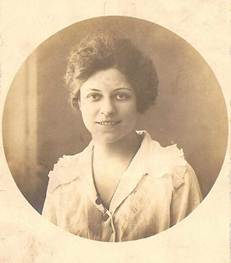
Figure 6. Alice Aurélle Victorine Wells.
(Image courtesy of Ancestry.com)
William and Alice had two children: Estella Alicia
Anne Wells (1925-2006) and Jack William Robert Wells (1927-2013).[12]
In 1939 the Wells family was residing in Wembley, Middlesex and William was a
Motor Garage Manager.[13]
William Henry Wells died on 23 October 1958 in Colindale Hospital, Hendon, Middlesex. His home address at the time was 85a Kenton Road, Middlesex. Colindale Hospital generally treated tuberculosis at the time of Wells’s death, so this might be an indication of his cause of death. Probate of Wells’s Will took place in London on 1 December 1958. His effects, in the amount of £696-6s-1d (about $27,000 US in 2025 currency) were left to is widow.
REFERENCES:
Census
1. 1901 Census of England.
2. 1911 Census of England.
3. 1921 Census of England.
4. 1939 Register.
Civil Documents
1958 Probate Calendar, p. 290.
Family Tree
1. Ancestry.com: William Henry Wells.
2. Ancestry.com: Francis Henry Wells (father).
3. Ancestry.com: Alice Aurélie Victorine Mercier (wife).
Internet Web Sites
The Long, Long Trail: History of the 4th Division.
https://www.longlongtrail.co.uk/army/order-of-battle-of-divisions/4th-division/
Military Documents
1. Hospital Admission Form.
2. Royal Engineers Medal Roll: British War Medal and Victory Medal.
3. Military Medal Index Card.
Periodicals
Battle Honours of the Royal Engineers [4th Divisional Signal Company]. The Royal Engineers Journal. The Institution of Royal Engineers, Chatham, Kent, 1925-1932.
ENDNOTES
[1] Ancestry.com: Family Tree.
[2] 1911 Census.
[3] Since Wells’s service papers were not available to the author, it is not known what rank he held when he completed his training. Since he was posted to a Royal Engineers signal company he may have been a Driver.
[4] Medal Index Card.
[5] Commonwealth War Graves Commission.
[6] Battle Honours of the Royal Engineers.
[7] Hospital Admission Form.
[8] R.E. Medal Roll.
[9] Battle Honours of the Royal Engineers.
[10] The Long, Long Trail.
[11] Ancestry.com: Family Tree.
[12] Ibid.
[13] 1939 Register.